PTSD & C-PTSD: How Trauma Lives in the Body
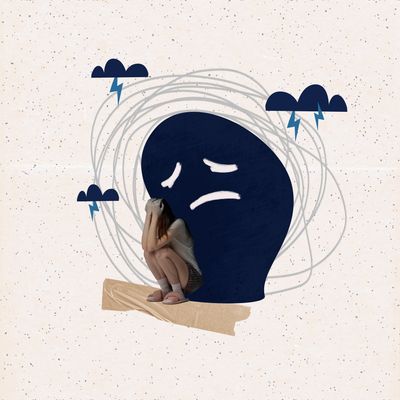
Trauma Counselling at Soma House Counselling & Wellness – Nanaimo, BC
Trauma is not defined solely by what happened to you — it is defined by what happened inside you. As Bessel van der Kolk describes in The Body Keeps the Score, trauma overwhelms the body and brain’s ability to cope, leaving the nervous system in a persistent state of alertness, fear, or shutdown. Even long after the event has passed, the body may continue to respond as if the danger is still present.
Trauma researchers and fellow clinicians such as Bessel van der Kolk and Gabor Maté describe trauma as something that affects the whole person — the brain, body, emotions, relationships, and sense of self — not just memory (van der Kolk, 2014; Maté, 2022).
At Soma House Counselling & Wellness, we honour the reality that trauma is held not just in memory, but in the body, emotions, relationships, and sense of self. Understanding how different forms of trauma develop — and how they show up — is an essential part of healing.
What Trauma Does to the Body and Nervous System
When something overwhelming or threatening happens, your body goes into survival mode. This is not a conscious choice — it’s your nervous system doing its job.
Research shows that trauma can:
- Keep the body’s alarm system (amygdala) overactive
- Reduce access to areas of the brain involved in calming, reasoning, and emotional regulation
- Disrupt sleep, digestion, energy, and mood
- Affect concentration, memory, and emotional control
Neuroimaging studies consistently show altered activity in the amygdala, hippocampus, and prefrontal cortex in people with trauma and PTSD, explaining why trauma responses often feel automatic and hard to control (Hayes et al., 2012; van der Kolk, 2006).
PTSD: Trauma as a Result of a Single Overwhelming Event
Post-Traumatic Stress Disorder (PTSD) often develops following a single traumatic or life-threatening experience, such as:
- Car accidents or severe injuries
- Sexual assault or interpersonal violence
- Combat exposure or first-responder exposure
- Natural disasters
- Sudden loss or medical emergencies
People living with PTSD may experience:
- Flashbacks or intrusive memories
- Nightmares
- Hypervigilance or being easily startled
- Avoidance of reminders of the trauma
- Difficulty sleeping or regulating emotions
Neuroscience research shows that following trauma, the brain’s fear circuitry becomes more active, while systems responsible for emotional regulation and threat appraisal become less accessible (Shin & Liberzon, 2010). This helps explain why someone may logically know they are safe, yet still feel unsafe in their body.
As described by van der Kolk (2014), trauma can reorganize the brain so that the amygdala remains on high alert while areas involved in reasoning, self-soothing, and emotional regulation are less available — which is why trauma responses are not about logic, insight, or willpower.
Complex PTSD: Trauma That Repeats, Accumulates, and Reshapes Identity
Complex PTSD (C-PTSD) develops from chronic, repeated, or relational trauma, often occurring during childhood or across long periods of vulnerability. This can include:
- Emotional, physical, or sexual abuse
- Chronic neglect or unsafe caregiving
- Growing up in unpredictable or threatening homes
- Domestic violence
- Living in war zones or experiencing displacement
Along with symptoms of PTSD, C-PTSD often includes:
- Chronic shame, guilt, or self-blame
- Emotional dysregulation (anger, numbness, overwhelm)
- Difficulty trusting or feeling safe in relationships
- Deep wounds to identity and self-worth
- Somatic symptoms such as chronic tension, pain, gastrointestinal issues, and fatigue
Research shows that repeated interpersonal trauma has a greater impact on emotional regulation, identity, and relationships than single-event trauma alone (Cloitre et al., 2013).
In The Myth of Normal, Dr. Gabor Maté describes how trauma often develops when people must adapt to environments where emotional needs were not met. These adaptations may support survival early on but create long-term emotional and physical costs — a view strongly supported by developmental trauma and ACEs research (Felitti et al., 1998; Shonkoff et al., 2012; Maté, 2022).
Trauma, Boundaries, and the Healing Process
For many people with Complex PTSD, learning to set and maintain healthy boundaries is a vital part of healing.
When past experiences required you to prioritize others’ needs, tolerate harm, avoid conflict, or ignore your own limits to stay safe, boundaries may feel unfamiliar — or even dangerous. Boundaries are not about pushing people away. They are about protecting your mind, body, and heart.
Trauma research shows that recovery requires restoring a sense of choice, agency, and bodily awareness — all of which are directly linked to boundary-setting and self-trust (Herman, 1992; Ogden et al., 2006).
A Clinician Who Understands Trauma from the Inside
At Soma House Counselling & Wellness, trauma counselling focuses on how trauma affects the mind and body, not just thoughts or memories. Our approach emphasizes safety, nervous-system regulation, and moving at a pace that feels right for you.
We support you in reconnecting with your body’s signals, strengthening self-trust, and learning to set boundaries with less guilt and more confidence. Healing is approached gently, collaboratively, and without pressure.
This work is led by Farnaz Farrokhi-Holmes, RCC, CCC, who brings both professional training and lived experience to her trauma work. Having grown up in an active war zone, she understands how chronic stress and threat impact the nervous system and sense of safety.
Her work emphasizes nervous-system regulation, attachment, boundary development, and client-led pacing. Farnaz integrates EMDR, somatic approaches, attachment-focused therapy, and trauma-informed narrative work to support clients experiencing PTSD, Complex PTSD, and relational trauma. Her clinical perspective is informed by both professional training and lived experience of growing up in an active war zone.
Begin Your Healing Journey
You don’t have to heal alone. At Soma House, we integrate EMDR, somatic therapy, nervous system regulation, attachment-focused approaches, and trauma-informed narrative work to support recovery from PTSD, Complex PTSD, childhood trauma, and relational wounds.
References
Cloitre, M., Garvert, D. W., Brewin, C. R., Bryant, R. A., & Maercker, A. (2013).
Evidence for proposed ICD-11 PTSD and complex PTSD: A latent profile analysis. European Journal of Psychotraumatology, 4, 20706. https://doi.org/10.3402/ejpt.v4i0.20706
Felitti, V. J., Anda, R. F., Nordenberg, D., Williamson, D. F., Spitz, A. M., Edwards, V., Koss, M. P., & Marks, J. S. (1998).
Relationship of childhood abuse and household dysfunction to many of the leading causes of death in adults: The Adverse Childhood Experiences (ACE) Study. American Journal of Preventive Medicine, 14(4), 245–258. https://doi.org/10.1016/S0749-3797(98)00017-8
Hayes, J. P., Hayes, S. M., & Mikedis, A. M. (2012). Quantitative meta-analysis of neural activity in posttraumatic stress disorder. Biology of Mood & Anxiety Disorders, 2, 9. https://doi.org/10.1186/2045-5380-2-9
Herman, J. L. (1992). Trauma and recovery: The aftermath of violence—from domestic abuse to political terror. Basic Books.
Maté, G. (2022). The Myth of Normal: Trauma, illness, and healing in a toxic culture. Knopf Canada.
Ogden, P., Minton, K., & Pain, C. (2006). Trauma and the body: A sensorimotor approach to psychotherapy. W. W. Norton & Company.
Shin, L. M., & Liberzon, I. (2010). The neurocircuitry of fear, stress, and anxiety disorders. Neuropsychopharmacology, 35(1), 169–191. https://doi.org/10.1038/npp.2009.83
Shonkoff, J. P., Garner, A. S., Siegel, B. S., et al. (2012). The lifelong effects of early childhood adversity and toxic stress. Pediatrics, 129(1), e232–e246. https://doi.org/10.1542/peds.2011-2663
van der Kolk, B. A. (2006). Clinical implications of neuroscience research in PTSD. Annals of the New York Academy of Sciences, 1071(1), 277–293. https://doi.org/10.1196/annals.1364.022
van der Kolk, B. A. (2014). The Body Keeps the Score: Brain, mind, and body in the healing of trauma. Viking.